Field of Science

Showing posts with label ERVs. Show all posts

On the experimental generation of endogenous (non-retroviral) RNA viruses

A retrovirus. http://www.itqb.unl.pt/
The sheer amount of genomic data now available from a wide range of species has allowed the increased scrutiny over what genes and DNA sequences are present in their chromosomes. What we have begun to notice is that many of these sequences have a viral origin. 

And, in the recent half-decade, the numbers of these endogenous viruses discovered have rapidly increased, but how did they get there? What are they doing? And, are they bad for us? Only a true experimental model system can answer these question but this is something which is lacking.


Lets talk about ERVs

Now, viruses have left their mark on our genomes in more ways than one; infection and associated disease/mortality has heavily influenced the genetic structure of populations via natural selection and genetic drift for millions of years. Yet, another important mechanism is that employed by the endogenous retroviruses (ERVs) that have inserted a DNA copy of themselves into our chromosomes - the norm for retroviruses - and have forever become part of us.


Over the course of evolution, these once infectious viruses have become redundant, building up a collection of genetic mutations resulting in loss of replicative ability. Although many still play a role in the cellular biology of the host and have been a great source of genetic novelty over the billions of years of evolution.


For some excellent info on these viruses, see ERVs archive of ERV-related material.


What about non-ERVs?

However, what we have noticed is that viruses other than retroviral species have inserted themselves into genomes of humans, other animals and even plants and fungi. Many of these viruses have a DNA phase in their replication cycle, which is put into the genome of their host to aid their survival and so it may not be all that surprising that they have stayed with us through evolution (these viruses include many single-stranded DNA viruses and again).

One intriguing observation is that many of these non-retroviral endogenous viruses are in fact - or were - RNA viruses with no known DNA phase during replication. They are therefore called Non-retroviral RNA virus sequences (NRVSs). See plant NRVSs and mammalian NRVS (ebola virus-like borna virus-like  and many more - (lots, they're everywhere). There is strong evidence that these integrations occurred thousands, if not millions of years ago and could have played a role in the evolution of many species.


How can we study these viruses?

But just exactly how do these viruses do it? After-all, they are RNA viruses without a reverse-transcriptase enzyme and hence no natural ability to produce a DNA genome that can be inserted into our chromosomes. And, can we follow this endogenisation experimentally? One mechanism is thought to occur when an endogenous retrovirus-like element joins itself to a non-endogenous RNA virus and then this chimera is put into our genome. But this is really only half the story - can we ever study the entire process, from initial infection to endogenisation?

 For an RNA virus to become fully integrated into our germline it has to first infect our germ-line cells (sperm/oocytes); its RNA genome must be copied into DNA and this DNA molecule must be inserted into the chromosome. It also must allow for the development of healthy and reproductively active offspring and can then let evolution take its course. An experimental model system of this process would allow for a better understanding of this process in molecular detail and how this relates to the evolutionary process as a whole.

Here's how you would do it:

The animal model
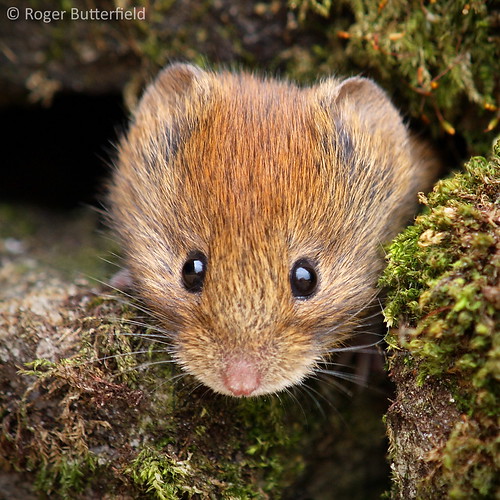
Bank vole - a good model for endogenous viruses?
A small-animal model that could be infected by a  type of virus that had been shown to integrate into the genome (borna disease virus, for example) would make this easier to study. Plus, many rodents have been shown to harbour many NRVSs already.

The virus infection

You would infect the animals with the virus in as natural conditions as possible and look to see whether the virus entered and replicated in the cells of the germ-line.A GFP-expressing virus would work best for this.

Detection of RNA - DNA

What you would have to do is be able to track the process of turning the RNA genome into DNA. A PCR-based screening would work well for this and could be applied to a range of tissues in the host, including occytes/spermatozoa.

Integration

To prove that the DNA copy was inserted into the host chromosome you would need to sequence the sites where the DNA had integrated in and determine where in the genome it lay.

Stability

This experimentally infected rodents could be bred continously and the presence of endogenised virus looked for in their offspring. The expression of said virus genes (if there is any) could be followed in rodent tissues.

Borna disease PCR without reverse-transcriptase. A) no nuclease treated, B) RNA nuclease treated, C) DNA nuclease treated and D) PCR with reverse transcriptase step

Well one paper has maybe taken the first step in the development of such a model system (although they may not know it). It has shown evidence that if you infect baby bank voles with borna virus, directly into their brain you can detect borna virus-specific DNA sequences using PCR following DNA extraction (see above PCR gel for results).  And, these sequences resulted from the virus, not some already-endogenised borna virus sequence. Although they did not check for germ-line infection or integration, this is the first step. The applicability of Borna virus reverse genetics and these animal models could make this kind of study feasible but certainly not easy. We may in future catch a glimpse of this process in real-time.

ResearchBlogging.orgKinnunen, P., Inkeroinen, H., Ilander, M., Kallio, E., Heikkilä, H., Koskela, E., Mappes, T., Palva, A., Vaheri, A., Kipar, A., & Vapalahti, O. (2011). Intracerebral Borna Disease Virus Infection of Bank Voles Leading to Peripheral Spread and Reverse Transcription of Viral RNA PLoS ONE, 6 (8) DOI: 10.1371/journal.pone.0023622

The molecular domestication of amphibian retroviruses - do they play aphysiological role?


Xenopus tropicalis - do recently identified ERVs play a functional role?


ResearchBlogging.orgWe mostly think of viruses of being ‘bad’ and ‘dangerous’ yet there are countless examples of viruses playing a positive role in their host’s life. These symbiotic agents have been co-opted by the host to do something good; some viruses have even been inserted into our genomes and thus are forever tied to our germline and our descendants - sometimes even these viruses can do good. This is the kind of game evolution plays with our viral parasites and us – its generally pretty cruel and inconsiderate but every so often we get something good out of it.

One example of these endogenous viruses is the endogenous retroviruses or ERVs, which are somewhat related to the non-endogenous – ‘exogenous’ – retroviruses that can cause disease in us and other animals (HIV XMRV?). Just to put it into perspective, 8% of our genome is made up of these ERVs and they also make up a large chunk of other vertebrate genomes. The majority of these inserted retroviral genomes have been destroyed by the forces of evolution and thus bear little resemblance to their ‘wild’ cousins; they are not expressed and their sequence shows little homology to other retroviruses. However, some ERVs have changed very little, suggesting an important function may be conserving them – these are expressed and do sort of resemble the exogenous ones. The insertion of a novel ERV sequence into a host’s genome acts as evolutionary raw material allowing significant adaptive functions to arise and a great deal of evidence suggests they can these can even play a physiological role in host biology – this is known as molecular domestication. One interesting example is the ERV role in the mammalian placenta.


A recent paper reports the discovery and characterisation of an amphibian ERV whose genomic organisation is highly conserved making it a good candidate to have a novel physiological function. Investigating the genome of Xenopus tropicalis - an 'African clawed frog', the group discovered a unique DNA sequence that was highly related to a previously characterised Xenopus protein with frost-resistant functions - allowing winter survival in woodland frogs. This 9,551 base-pair DNA sequence not only contained the intact frost-resistant gene but also a full-length retroviral genome with the general organisation of many common ERVs – 5’ LTR-GAG-POL-ENV-3’LTR.

ABSTRACT: We report on the identification and characterization of XTERV1, a full-length endogenous retrovirus (ERV) within the genome of the western clawed frog (Xenopus tropicalis). XTERV1 contains all the basic genetic elements common to ERVs, including the classical 5'-long terminal repeat (LTR)-gag-pol-env-3'-LTR archi- tecture, as well as conserved functional motifs inherent to each retroviral protein. Using phylogenetic analysis, we show that XTERV1 is related to the Epsilonretrovirus genus. The X. tropicalis genome harbors a single full-length copy with intact gag and pol open reading frames that localizes to the centromeric region of chromosome 5. About 10 full-length defective copies of XTERV1 are found interspersed in the genome, and 2 of them could be assigned to chromosomes 1 and 3. We find that XTERV1 genes are zygotically transcribed in a regulated spatiotemporal manner during frog development, including metamorphosis. Moreover, XTERV1 transcription is upregulated under certain cellular stress conditions, including cytotoxic and metabolic stresses. Interestingly, XTERV1 Env is found to be homologous to FR47, a protein upregulated following cold exposure in the freeze-tolerant wood frog (Rana sylvatica). In addition, we find that R. sylvatica FR47 mRNA originated from a retroviral element. We discuss the potential role(s) of ERVs in physiological processes in vertebrates.

Following the characterisation of the genome sequence, the group looked whether there any more ERVs like this one in Xenopus genomes  to see if  this a rare example of a highly conserved ERV and were there any other examples of these sequences present? There turned out to be 59 genomic loci with some sort of homology to the newly found ERV however all had significant mutations present rendering them functionally inactive – at least where gene expression is concerned. These sequences were mapped onto Xenopus chromosomes, showing that the intact ERV was present on chromosome and the ‘damaged’ ones were found throughout the genome. This ERV is after all a lone agent in the Xenopus genome - confirmed by these experiments.

Phylogenetic studies were also carried out which suggested that primary retroviral integration occurred roughly 41 million years ago and from then on multiple rounds of movement around the genome or reinfection generated the many mutated copies around the genome. Their results also suggest that this ERV is actively replicating and inserting itself into the genome up to the present day. A cousin of this retrovirus was also found in the closely related X.laevis genome showing that integration occurred prior to the evolutionary separation of these two lineages.


They next turned their attention to whether this ERV had a functionally active role (is it transcribed; in what tissues and at what points in frog development?) in host biology as observed in other host/ERVs. Using real-time PCR and in situ hybridisaton techniques, the group were able to follow ERV expression throughout X. tropicalis development and assess the level of transcription and tissue localisation and possible infer a physiological function. They noted a highly regulated yet dynamic expression of gag, pol and env expression from fertilisation through metamorphosis (curiously a peak of activity was seen during metamorphosis) and adult life but does this control of expression actually mean something functional or is it merely physiological neutral? This ERV may just be replicating within the host genome without contributing something to host life. In order to understand this, they subjected X. tropicalis tadpoles or cell lines to a number of biological ‘stresses’ e.g. metabolic, temperature and UV stresses. An upregulation of ERV expression was seen upon metabolic and UV stresses and not in temperature – suggesting a fine tuning of its expression in response to a number of stresses. Whether this actually achieved something functionally was not investigated.


A recently discovered retrovirus derived gene in another frog species was found to play a role in protecting frog cells from the effects of freezing conditions. This study, on the backs of that investigation determined that frost-tolerant gene was derived from a highly conserved ERV present within Xenopus genomes. A distinct physiological role for these ERV-derived genes was not validated in this study yet in the future, further characterisation of its expression in vivo under temperature stress should be undertaken. This work underlines the importance that retroviruses and their endogenised cousins play in host cell functioning and evolution. Viruses are not all bad news – sometimes they can help you.

Roossinck, M. (2011). The good viruses: viral mutualistic symbioses Nature Reviews Microbiology, 9 (2), 99-108 DOI: 10.1038/nrmicro2491

Sinzelle, L., Carradec, Q., Paillard, E., Bronchain, O., & Pollet, N. (2010). Characterization of a Xenopus tropicalis Endogenous Retrovirus with Developmental and Stress-Dependent Expression Journal of Virology, 85 (5), 2167-2179 DOI: 10.1128/JVI.01979-10